97%
satisfaction rate

Help centre
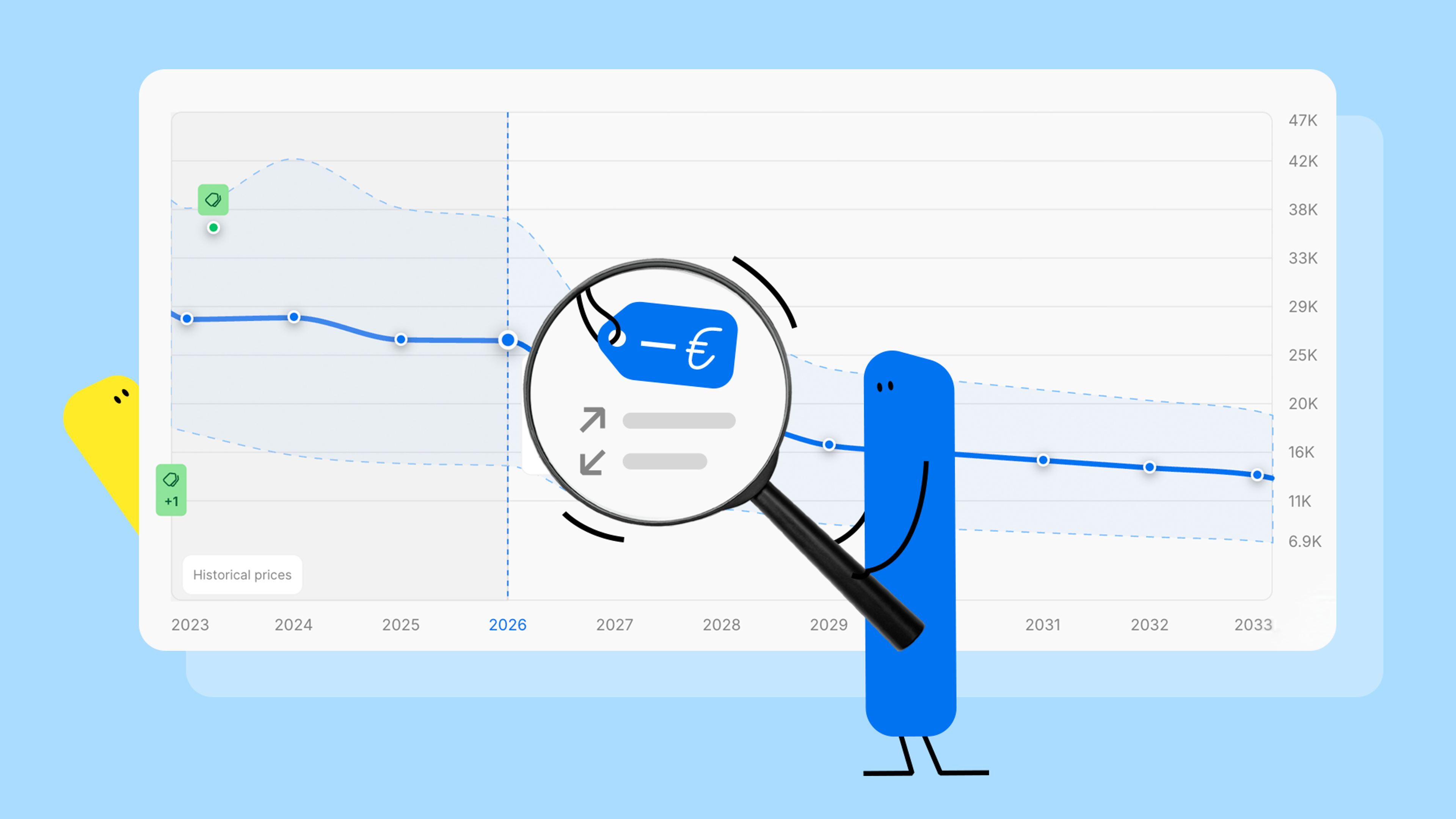
The Market Price section shows a vehicle’s current estimated price within a specific market. It includes a graph based on available information for the same model and model year, showing price changes over time, typical estimated price ranges for each year, and indications of future price trends.
The graph in the Market Price section may look simple at first, but it can offer valuable insights when used correctly.
By hovering over the interactive points on the graph, you can see the estimated average vehicle price for each year, based on vehicles of the same model and model year.
In addition, a new dotted band around the line shows the predicted high and low price ranges.
This part of the graph shows how much similar cars cost in the past, along with the typical highest and lowest price ranges for each year. If the current asking price is much higher than historical prices without a valid reason, it may suggest that the seller is overpricing the car.
The right side of the Market Price graph focuses on estimated future prices. It uses predictive analytics to show how much a specific vehicle model may cost in the coming years.
Just like with historical data, you can hover over individual points on the graph to see the estimated average market price, along with the predicted highest and lowest price ranges for each year – up to the next 7 years.
Note: Price forecasts are based on historical data and current market trends. Actual resale value may vary depending on factors such as market changes, vehicle condition, location, or other external factors.
If available, the Market Price section may also include recorded selling prices. These appear as green markers on the graph and represent asking or selling prices from past listings of the vehicle.
If some of these sales are very old and no longer visible on the graph, they will be shown in a pop-up on the left side of the graph, using similar green markers.
Below the graph, the Market Price section may also include additional insights, depending on data availability. These insights are designed to help you better understand how a vehicle’s value may change over time:
If you’re selling, the Market Price section can help you set a competitive price by showing the typical low and high prices for similar cars. This makes it easier to position your car within that range, while factoring in its condition and features.
If you’re buying, the same information helps you see whether an asking price falls within a reasonable range or stands out as too high or unusually low.
The vehicle’s market price in carVertical reports is estimated using information from the same model and model year in the country where the report was generated. This helps reflect local market conditions and recent pricing trends when estimating the vehicle’s value.
To ensure consistency across time, currency conversions are handled as follows:
The market price estimations in carVertical reports are generally accurate. However, the final price can still vary depending on factors like the condition of specific cars.
For example, two models manufactured in the same year may have different prices because one was better cared for than the other. Discrepancies can also appear if a vehicle has unique features, modifications, or unreported issues.
Therefore, the market value estimation can be a helpful guideline, but consider different possibilities and don’t base your decisions solely on this information.
The Market Price section helps both buyers and sellers better understand where a vehicle stands in the market.
If you’re buying, it can help you:
If you’re selling, it can help you:
Overall, it gives you a clearer reference point when comparing prices and making buying or selling decisions.
The Market Price section may be missing from the report if we don’t have access to relevant data or if not enough data is available. Additionally, the estimated market price may not be included in the reports for newer models if there isn’t enough historical data to establish a reliable estimate.
Still have questions? If you need more help understanding the Market Price section of your report, feel free to reach out to our support team or check out our blog post on checking the used vehicle’s value.





Get the answers you need – whenever you need them. Drop us a message and we’ll get back to you.
satisfaction rate
always available
avg. response time
Read our latest news and detailed analysis