
08/01/2026
carVertical 2025 upgrade recap: Feature improvements and what’s next

Gabrielė Slabšienė
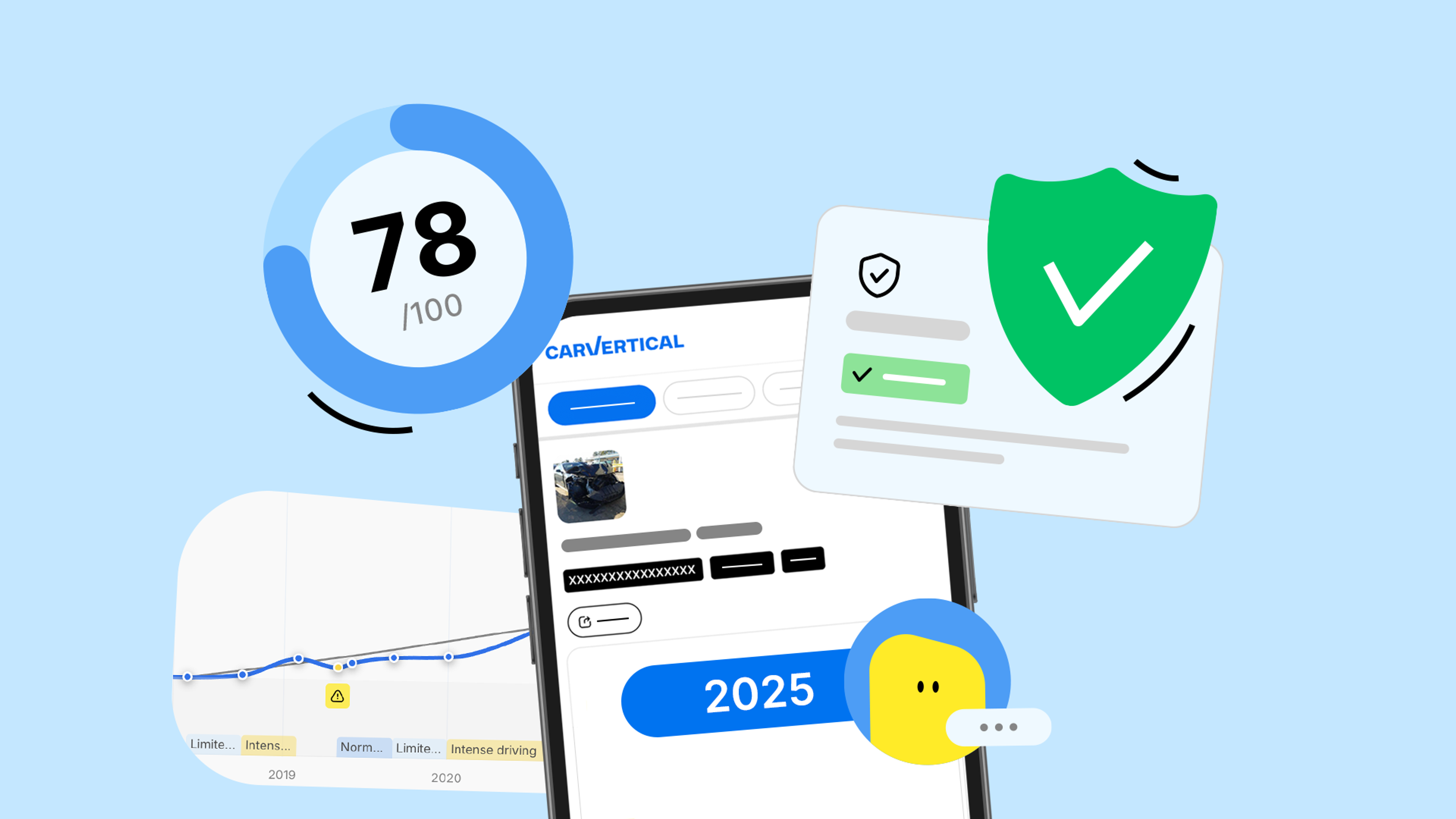
Helping people make smarter decisions when buying and selling used cars has always been at the heart of carVertical. In 2025, we strengthened that mission even further. By adding new features to our reports, focusing more on clarity than complexity, and turning data into deeper insights, we made it easier than ever to understand, compare, and confidently evaluate any used vehicle.
Let’s look back at the milestones, big and small, that shaped carVertical’s 2025.
Understanding a car’s story, not just looking at the facts: key product improvements
This year, we continued working on making vehicle information easier to understand and interpret. Our goal was (and still is!) to provide a clearer context, helping users make sense of the data and see the story behind the car they check.
Insights
Most car buyers aren’t experts, and numbers alone don’t always help them understand a car’s real condition. That’s why in 2025 we introduced Insights to our reports, helping you interpret information in each section.
Found a record that the car you’re checking used to be a taxi, but not sure why it matters? The car was imported, and you don’t know how to discuss it with the seller? carVertical Insights explain what these findings could mean and why they’re worth asking about.
carVertical score
We’re especially proud of the carVertical Score, which saw the light in the second half of 2025. To generate it, we analyze all available records in the report, evaluate their impact on the car’s condition, perform calculations, and convert the results into a single number that summarizes the vehicle’s history. This provides an at-a-glance view of its overall condition and makes it easier to compare with similar cars.
carVertical Score is currently available in four markets – the United Kingdom, Finland, Czechia, and Poland – but we’re optimistic that more of you will be able to access it in the future!
Mileage section improvements
The Mileage section in our reports received a major upgrade this year. We improved the graph itself to make the mileage curve easier to read and understand. But we also added two new features: Driving habits and Mileage prediction.
Mileage prediction is a new feature that estimates the vehicle’s likely current mileage (at the time the report is generated) and displays it as a point on the existing mileage graph. It appears in reports when the last mileage record is no older than three years and no newer than six months.
By showing this estimated mileage on the graph, Mileage prediction helps you quickly assess whether the odometer reading you see is realistic, making it easier to spot potential inconsistencies or tampering – without having to guess or manually calculate it yourself.
Driving habits, on the other hand, adds a whole new layer of insight to our existing Mileage section.
This feature analyzes a car’s usage patterns over its lifetime by calculating the average kilometers per month between its mileage records and comparing these intervals. It highlights periods when the car was driven more or less intensively – based solely on its own history rather than external benchmarks – so you can understand how it’s been used, not just how far it's traveled.
Damage section improvements
We haven’t forgotten one of our key sections – Damage. We reviewed not only our accident data providers but also how you use the different fields within this section. As a result, we’ve made several changes to improve both the user experience and the information available.
In addition to the Damage card, we’ve introduced a new Assessment card. These events are created when we have any signs that the vehicle could have been in an accident, e.g., when estimating part replacement costs, performing assessments in a body shop, etc.
While Damage events appear in yellow, Assessment events are shown in blue.
Moreover, we’ve introduced Similar records. When multiple records potentially refer to the same event (considering matching event date, location, and other factors), we group them into a single card for full transparency. The main card is typically the one that contains the most detailed information.
You can always click it to view all available records and the information they contain.
PDF one-pager
Need all the key details about a car’s history summarized? You can now download a PDF one-pager (in addition to a full report).
It fits all the most important information about a car on one page: car specs, damage records, mileage, theft status, and more, depending on available records – perfect for dealers, buyers, or anyone needing a quick overview.
“What’s next?” checklist
The best ideas are often the simplest, and that’s exactly what our “What’s next?” checklist is. It guides you through the steps to take after checking a car’s history, providing tips at each stage so you don’t miss anything important.
We’ve included this practical guide at the end of every report, so make sure to check all the boxes to confidently buy your next car.
Ownership history
In the UK and Italian markets, we introduced the Ownership feature, which lets you see how many owners a vehicle has had over its lifetime.
To get the most out of this feature, it’s important not only to know the number of owners but also to consider the duration of each ownership – either by checking the report, if available, or by asking the seller. This can help you identify potential red flags, negotiate more effectively, and make a better decision.
Our plan for 2026 is to add this feature to a few additional markets.
Insurance
We’ve also added a new Insurance card to the Legal status check section. It shows whether the car is currently insured and displays coverage validity dates (or the last recorded policy).
A lack of insurance can signal potential issues beyond legal risks, such as registration problems or unresolved damage, so it's important to check this before buying a used car.
In some markets, the Insurance card is always visible, even if there’s no data (e.g., Romania and Spain). In others, it will appear only when we find relevant records.
French emissions sticker
To make it easier for French users to understand a vehicle’s emissions level, reports generated in France now include Crit’Air sticker information.
These stickers indicate the vehicle’s pollution category based on its engine type and emissions level. In the report, we display which sticker the vehicle should have according to official criteria.
Summary section uplift
Following a user survey conducted in the spring, we learned that most of our users are very efficient – they want to see the most important facts as soon as they open a report and quickly determine whether it’s worth scrolling further.
To address this, we’ve reworked the summary section – both in design and in content – by adding more cards and enriching each one with the key information needed to understand a report at a glance.
Join our newsletter
We'll keep you updated with exciting news, useful content, and promotions.
You may opt out any time. For more details, review our Privacy policy.
Ongoing upgrades to improve your experience
Here are some of the key UX upgrades and new features we’ve rolled out across the user zone and the overall platform to make it easier to navigate and use:
- Smart login suggestions. Users now only need to enter their email, and we’ll detect the best way for them to log in – either with a password or a one-time code. This helps avoid confusion for those who signed up without setting a password.
- License plates in the user zone. Users can now generate reports using license plates (in supported countries) directly in the user zone. Multiple plates are supported, just like with VINs, and the improved flow makes the experience smoother.
- What’s new announcements. As long as you’re logged in, you’ll always know what’s new with the product. The “What’s new?” feature provides a short, structured record of updates, improvements, new features, and other changes, tailored to specific markets so users only see what’s relevant to them.
- Overall system upgrades. We made it more secure, streamlined, and efficient, ensuring a smoother and safer experience for everyone.
- carVertical app facelift. One of our biggest updates yet, bringing improvements to usability, performance, and the overall experience. From refreshed launch animations to improved ways for users to connect with us, we’ve reimagined the app from top to bottom.
And many more improvements that may not always be visible, but you’d certainly notice if they weren’t there!
Check your VIN
Avoid costly problems by checking a vehicle's history. Get a report instantly!
The road ahead for 2026
As we look to 2026, our focus remains on providing even deeper insights into the used car market.
We plan to release new features, expand existing ones to more markets, improve current functionalities, and continue uncovering trends that matter to buyers, sellers, and industry professionals alike.
With each report, survey, and data analysis, we aim to make navigating the used car market smarter, safer, and more transparent for everyone.
Article by
Gabrielė Slabšienė
Gabrielė is the Product Manager at carVertical, passionate about building digital experiences that make a real difference for users. She combines thoughtful design with practical solutions to create products and features that empower car buyers, sellers, and owners every day. Outside of work, Gabrielė has practiced Muay Thai for over a decade, channeling her focus and discipline both in the gym and in product development.